ServicesWindow Replacement
Window Replacement in Shoreline
We replace drafty, fogged and rotting windows with insulated units that are measured, flashed and sealed for a wet climate. You get a clear answer on insert versus full-frame, a written estimate, and most installs finished in a single day.
When replacing the window is the right call
A window is a glass unit, a sash, a frame and the flashing that ties it into your wall. When only one part has failed, a repair often makes more sense, and our window repair service covers stuck sashes, broken balances and worn weatherstripping. Replacement is the right call when the frame itself is the problem: aluminum frames that conduct cold and sweat all winter, wood sills soft with rot, or several insulated glass units that have lost their seals.
Many homes around Shoreline still have original single-pane aluminum sliders from the 1950s and 60s. Those frames have no thermal break, so warm, damp indoor air hits a cold metal surface and condenses, which is why you see puddles on the sill and black mildew in the corners. A modern double-pane unit with a low-E coating and argon fill keeps the inside glass close to room temperature, so that moisture stays in the air instead of running down the wall.
We look at every opening before we recommend anything. If a window can be saved, we say so.
What a window replacement includes
Measuring each opening
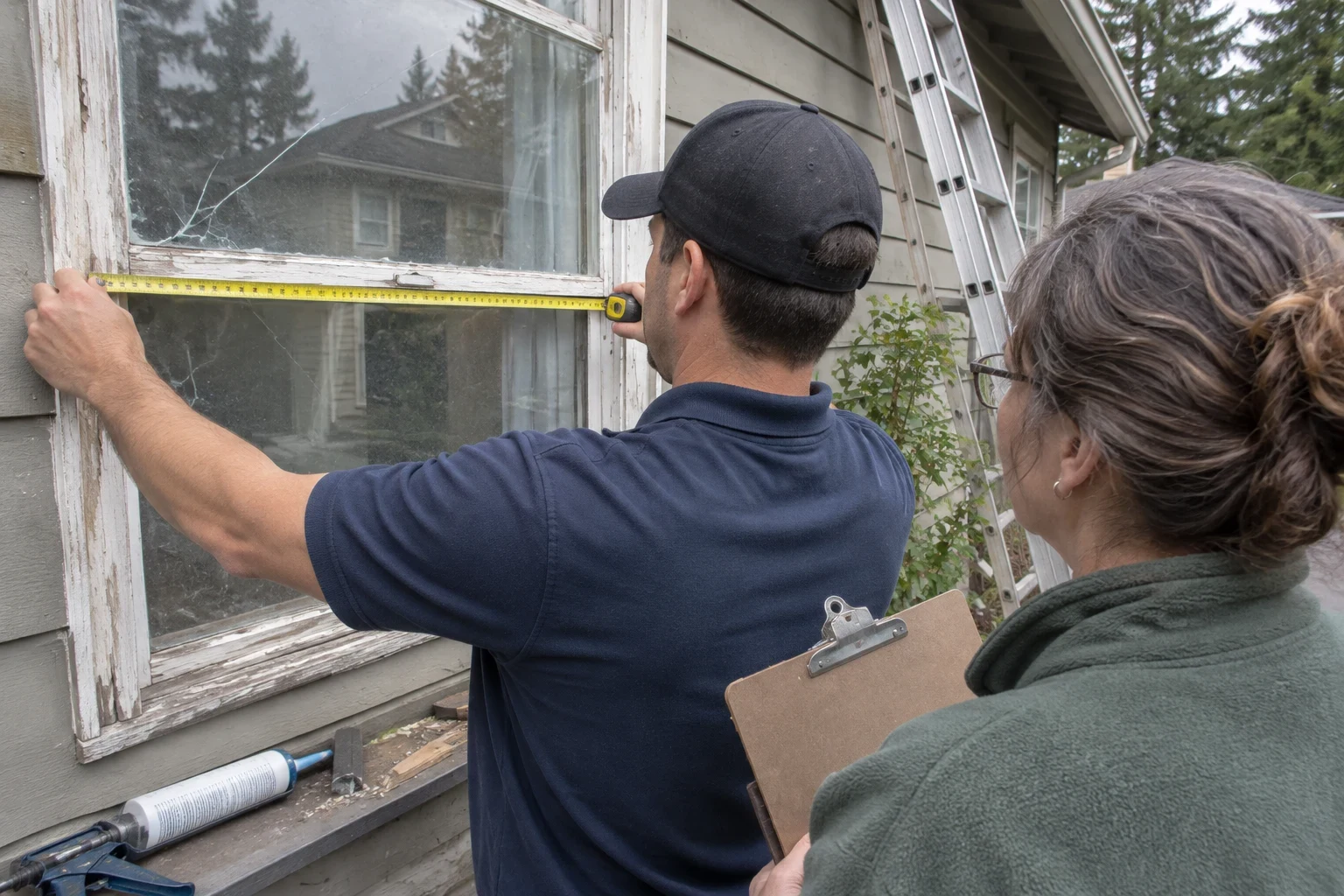
We take width and height readings at three spots and check the diagonals for square. Older openings are seldom true, and a unit built from a single measurement can leave gaps that caulk will never fix.
Insert or full-frame install
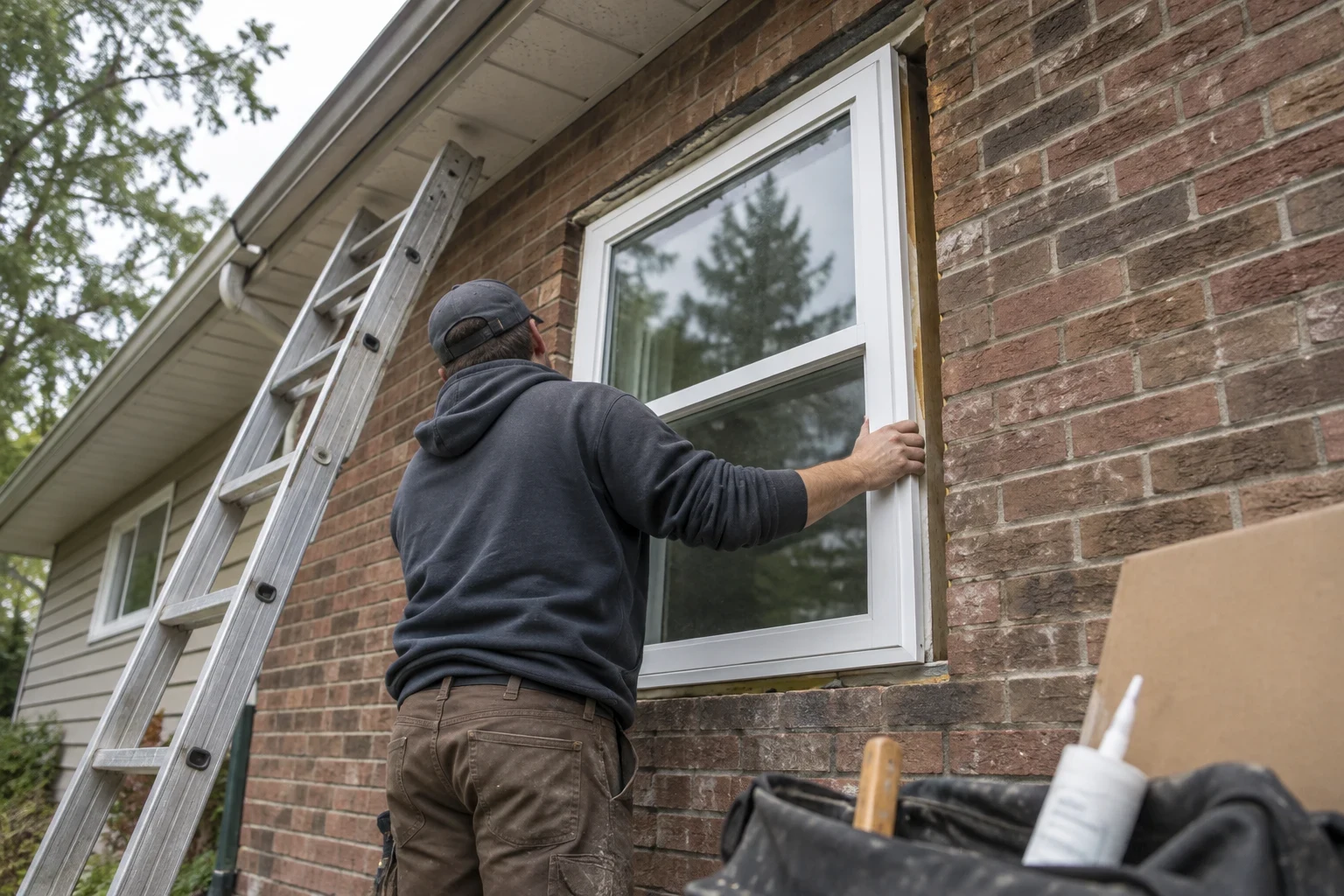
An insert fits the new unit inside the old frame, keeping your interior casing and exterior finishes intact when that frame is sound. A full-frame install strips the opening back to bare framing, which lets us see the studs and sill plate, cut out any rot and flash the opening correctly. We explain which method each window needs and the reason.
Glass and frame choices
We install vinyl and fiberglass frames with double-pane, low-E, argon-filled glass. Fiberglass grows and shrinks at close to the same rate as glass, an advantage on large or dark units, while vinyl is good value for most standard sizes. Tempered glass goes wherever code requires it, such as beside doors, over tubs and near the floor.
Flashing and sealing
On full-frame work we install a sill pan and lap flashing tape so water that slips behind the trim drains to the outside rather than into the wall. The space between unit and framing is filled with low-expansion foam instead of packed fiberglass, and the exterior trim gets a bead of sealant.
Haul-away and cleanup
Drop cloths go down indoors before we start. We load out the old units and scrap, then vacuum each work area before leaving.
Signs your windows need replacing
- Cloudy glass inside the unit
- A milky film or beads of moisture trapped between the two panes tell you the edge seal has broken and the argon has leaked out. With one fogged unit, swapping only the glass can work. With several, new windows are usually the better long-term spend.
- Puddles on the sill each morning
- Steady condensation from fall through winter usually comes from cold frames or single-pane glass. Over time it soaks painted trim and grows mold in the corners.
- Spongy wood at the bottom rail
- Push a screwdriver tip into the sill and lower sash rail. If the wood gives, moisture has been getting in, and the decay often runs down into the framing.
- Sashes that bind or won't latch
- Warped vinyl, swollen wood and worn aluminum tracks stop a sash from seating fully. The result is air leaks, outside noise and a lock that never catches.
- Air moving around the frame
- On a breezy day, hold the back of your hand near the edges. If you feel a draft, the weatherstripping has failed or there are gaps between the frame and the wall.
How the job runs
- 1
Phone call and visit
You call and describe what you are noticing, and we pick a time to come see your home. The quote costs nothing, and nobody will push you to sign on the spot.
- 2
Written estimate
Each window is listed by room with its size, frame material, glass package and install method, so you can compare every line. We also confirm whether a permit applies and take care of it if so.
- 3
Ordering
Your windows are manufactured to our measurements. Because custom units are not returnable, we review the order with you before it goes in.
- 4
Install day
Most installs are done in one day. The crew removes and sets one window before opening the next, so only a single opening is ever exposed, and every unit is checked for level, plumb and smooth travel before we continue.
- 5
Walkthrough
Together we operate and lock each new window, we show you how the tilt-in sashes come in for cleaning, and we hand over the product paperwork.
Factors that set your window replacement price
We price each project from the openings in your home, not from a per-window average, so two houses with the same count can land at different totals. The items below drive most of the difference. Each one shows up as its own line on your written estimate, and flexible payment options are available.
- Window type and dimensions
- Casements, oversized picture units and arched or custom shapes carry a higher unit price than a single-hung or slider of similar size. Bigger glass also means heavier units and more handling on install day.
- Install method
- A full-frame job uses more labor plus new trim, sill pan and flashing materials. It costs more than an insert, but it is the only way to reach and correct rot or missing flashing hidden behind the old frame.
- Frame material and glass options
- Fiberglass frames run higher than vinyl. Upgrades such as tempered safety glass, obscure glass for a bathroom or a triple-pane package each raise the cost of that unit.
- Hidden damage at the opening
- If the sill plate or framing is soft once the old unit comes out, it has to be rebuilt before the new window can be set. We photograph what we find and get your approval before any of that work starts.
- Reaching the opening
- Upper-floor windows above a deck, a steep grade or planting beds can call for taller ladders or staging, which adds setup time.
Common questions about replacing windows
- Do I need a permit to replace my windows?
- It comes down to what changes at the opening. Swapping a unit into the same rough opening is treated differently from enlarging an opening or framing a new one. We check what your project calls for and pull the permit whenever one is needed.
- Will new windows meet the Washington energy code?
- Yes. Washington sets a maximum U-factor for replacement windows, and the glass packages we specify come in under it. Each new unit carries a label showing its rating, so you can confirm it yourself.
- Should I choose vinyl or fiberglass frames?
- Vinyl costs less and does a good job in most standard-size openings. Fiberglass is stiffer and moves less with temperature swings, which pays off on wide units and on dark exterior colors that soak up sun. We tell you which of your windows would actually benefit from the upgrade.
- My house was built before 1978. What does that mean for the job?
- Paint from before 1978 may contain lead. We test the painted surfaces we plan to cut or pull out, and we keep tear-out dust contained so it does not spread through the rest of your home.
- Do all the windows have to be done at once?
- No. Splitting the work into stages is common, and the order is your call. Bedrooms and bathrooms often go first, since moisture from sleeping and showers condenses most heavily on that cold glass. Your estimate marks the units we would put at the front of the line and explains the reason for each.
Get a straight answer on every window
We walk through your home opening by opening, mark which units should be replaced and which can be repaired, and give you that in writing. Our crews work in Shoreline, Edmonds, Lake Forest Park and the surrounding area.