ServicesWindow Repair
Window Repair in Shoreline
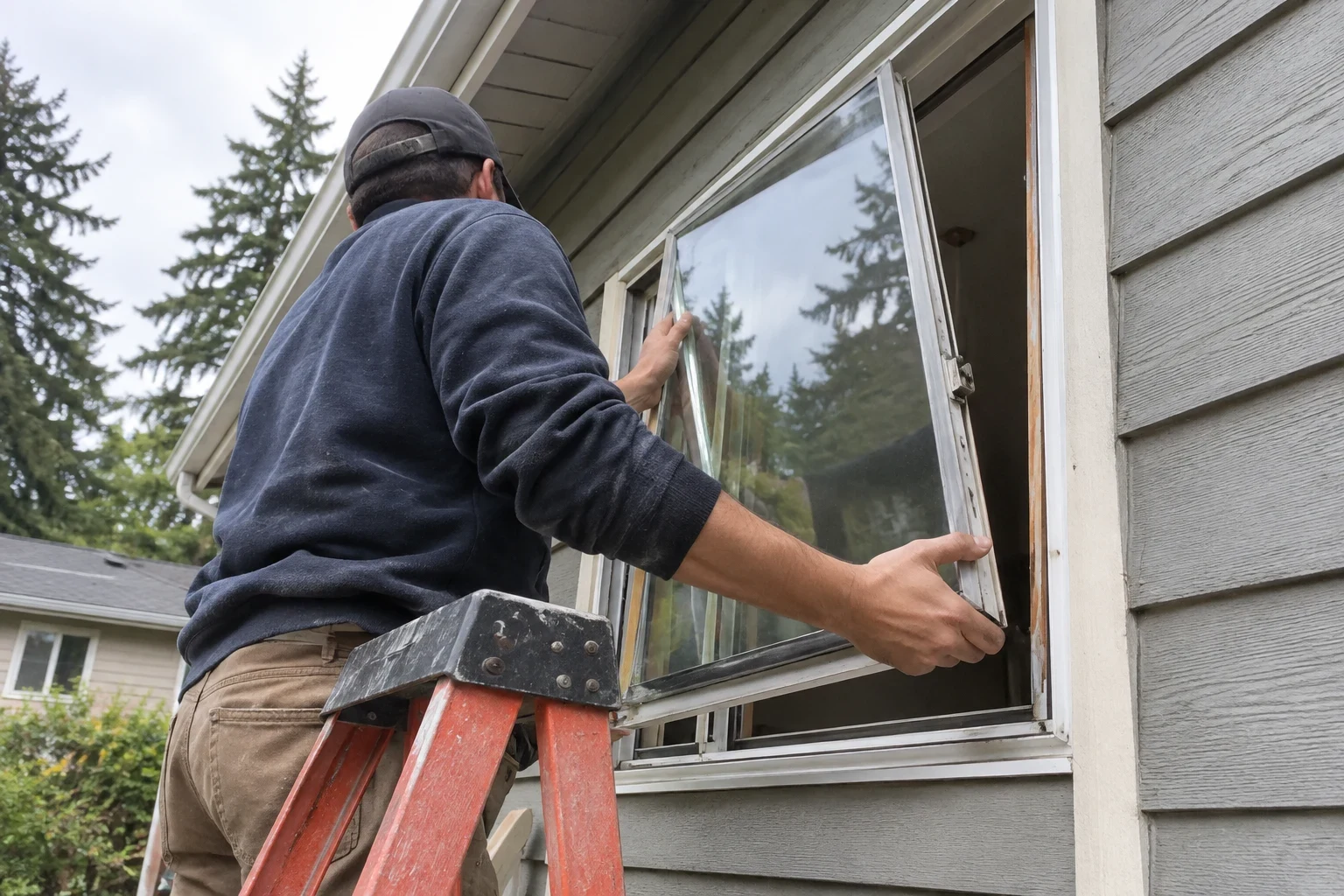
Fogged glass, a sash that won't stay up, a crank that spins without opening anything. Most of these trace back to one failed part, and we replace that part instead of the whole window. We check the frame first and tell you plainly whether repair makes sense.
When repair is the right call
A window is a frame, a sash, the glass unit and the hardware that moves it. Those parts wear out at different rates. An insulated glass unit can lose its seal while the vinyl frame around it is still square and solid, and a broken balance in a double-hung costs far less to swap than a new window. When the frame is sound, repair puts the window back to work and keeps the rest of your budget intact.
Repair stops making sense when the frame itself has failed: soft wood through the sill, warped vinyl, or aluminum frames that sweat and drip every winter morning. Shoreline's long wet season is hard on original wood sills from the 1950s and 60s, and once rot reaches deep into the frame, a patch only buys a year or two. In that case we say so and walk you through window replacement as the alternative, with no pressure either way.
What our window repair covers
- Insulated glass unit replacement
- When the seal between two panes fails, moist air gets in, the desiccant inside the spacer saturates and the glass fogs from the inside. No cleaning reaches that. We measure the unit, order a new one to match the glass thickness and spacer depth, and set it in the existing sash with new glazing tape or bead.
- Balances and sash cords
- Double-hungs that slam shut or won't stay open usually have a broken spiral or block-and-tackle balance, or on older wood windows a snapped sash cord. We identify the balance type and weight rating, then replace both sides so the sash runs evenly.
- Casement and awning hardware
- Stripped operator gears, bent arms and worn hinges keep casements from opening or closing tight. We fit matching operators and hinges so the sash pulls fully into its weatherstripping.
- Weatherstripping and seals
- Flattened or torn weatherstripping lets in drafts and wind-driven rain. We pull the old strip and fit the correct profile for the frame, whether bulb, fin or foam.
- Wood sill and sash repair
- Localized rot in a sill or bottom rail can often be cut out, consolidated and filled with epoxy, then primed and painted. We probe the surrounding wood first so we are not patching over a bigger problem.
- Broken glass
- Cracked panes are replaced with glass that meets code for its location, including tempered glass where it is required near doors, tubs and floors.
Signs a window needs repair
Haze between the panes
The edge seal has failed. The window still sheds rain, but it has lost much of its insulating value, and the haze only spreads.
A sash that drops or sticks
A double-hung that slides down on its own has a broken or weak balance. One that binds may have paint in the track, a swollen wood sash or a frame that has shifted.
Crank spins, window doesn't move
The operator gear is stripped. That is a parts swap, not a new window.
Wood that gives under pressure
Push the tip of a key or small blade into the bottom rail or sill. If the wood feels spongy or flakes away, decay has begun, and catching it early keeps an epoxy repair on the table.
Drafts or water at the sill
Worn weatherstripping or a failed sill seal lets air and water through. Moisture that pools there over a rainy winter can wick into the framing inside the wall.
Locks that no longer line up
When the sash lock misses its keeper, the sash has sagged or a balance is failing. A window that won't latch won't seal either.
How a repair visit works
- 1
The phone call
Tell us what the window is doing and roughly how old your home is. That points us toward the likely window type and parts before we arrive. The quote is free.
- 2
Inspection and measurement
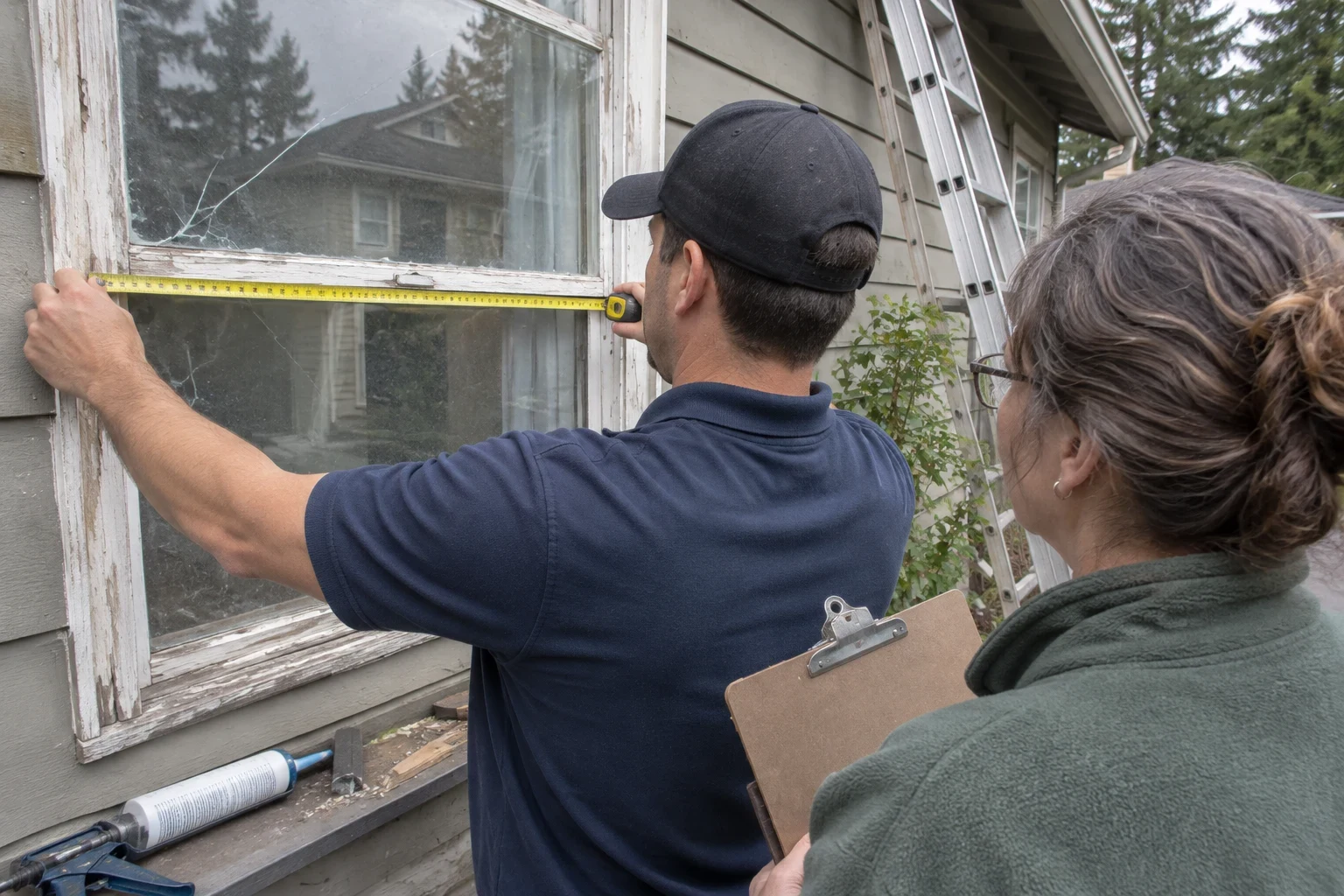
We check the frame, sash, glass and hardware, probe the wood for rot and note the manufacturer markings on the spacer or balance. You get a written estimate listing each part and the labor, plus our honest view on repair versus replacement.
- 3
Ordering the right parts
Insulated glass units are made to size, and some balances and operators have to be matched by brand. We order once measurements are confirmed so the repair fits the first time.
- 4
Repair day
We lay drop cloths inside, work from outside where we can and swap the parts. Before we leave we cycle every sash, test the lock and check the seal, then clear away glass dust and old hardware.
What moves the cost of window repair
Every repair is priced from what we find at the inspection, and the written estimate shows each part and the labor on its own line. If something new turns up once the sash is open, we talk with you before doing extra work. Flexible payment options are available.
- Glass size and type
- Larger units, low-E coatings, tempered glass and special tints all raise the cost of a replacement glass unit.
- Parts availability
- Common balances and operators are easy to source. Discontinued windows sometimes need a close-match part or a small modification to fit.
- Access
- A ground-floor window goes faster than a second-story one that needs ladders or a sash pulled from inside.
- Condition of the wood
- Surface rot repairs quickly with epoxy. Rot that runs deep into the sill takes more time, and past a certain point the job becomes a replacement.
- Number of windows
- Fixing several windows in one visit spreads the setup time across all of them.
Window repair questions
Something not covered here? (206) 895-6266
Can you replace just the fogged glass instead of the whole window?
In most cases, yes. When the frame is square and the sash is solid, the only part we swap is the insulated glass unit. The new unit is built to the old one's dimensions and overall thickness, so the window looks unchanged from the street. If the sash turns out to be damaged too, we explain how that affects the job before you commit.
Is it worth repairing old aluminum windows?
Sometimes. Rollers, latches and weatherstripping on aluminum sliders can be replaced, and they will slide and lock properly again. But aluminum frames conduct cold, so they sweat in winter no matter how good the glass is. If condensation is your main complaint, repair won't solve it, and we will tell you so.
How long does a repair take?
Most hardware and weatherstripping swaps are quick once the parts are on hand. Custom glass units have to be made first, so expect a measuring visit, then a second visit to install. We give you a realistic timeline when we write the estimate.
Do I need a permit for window repair?
Replacing glass, balances, hardware or weatherstripping is maintenance and generally does not call for a building permit. If the work grows into replacing the window or changing the opening, permit rules can apply, and we tell you before anything is ordered.
Will you try to sell me new windows instead?
No. If repair will give you years of good use, that is what we recommend. We only bring up replacement when the frame has failed, and we show you what we found so you can judge it yourself.
Put a failed part back in working order
Describe the symptom on the phone, whether it is fogged glass, a dropping sash or a dead crank, and we will arrange a visit to inspect it. The quote costs nothing, and you will hear honestly whether repair or replacement is the better fit.